
How We Use AI to Find the Best Tenants in 2026
Property management is no longer just about collecting rent and responding to maintenance calls. In 2026, the most successful rental portfolios are powered by intelligent systems that anticipate problems, reduce risk, and improve decision-making—without removing the human judgment that real estate still requires.
This is where AI property management technology 2026 comes into play.
At its best, AI doesn’t replace people. It amplifies experience, consistency, and accountability. The result is better tenants, smoother operations, and less stress for property owners.
The Shift to AI-Driven Property Management
Over the last decade, property management technology evolved from spreadsheets to cloud software. In 2026, the evolution has accelerated again—this time into collaborative AI systems that work alongside property managers and owners.
Key drivers of this shift include:
- Larger rental portfolios managed by fewer people
- Rising tenant expectations for speed and transparency
- Increased regulatory complexity
- Pressure to reduce vacancy, delinquency, and surprise maintenance costs
AI provides scale and precision—but only when deployed correctly.
What “Collaborative AI” Really Means in 2026
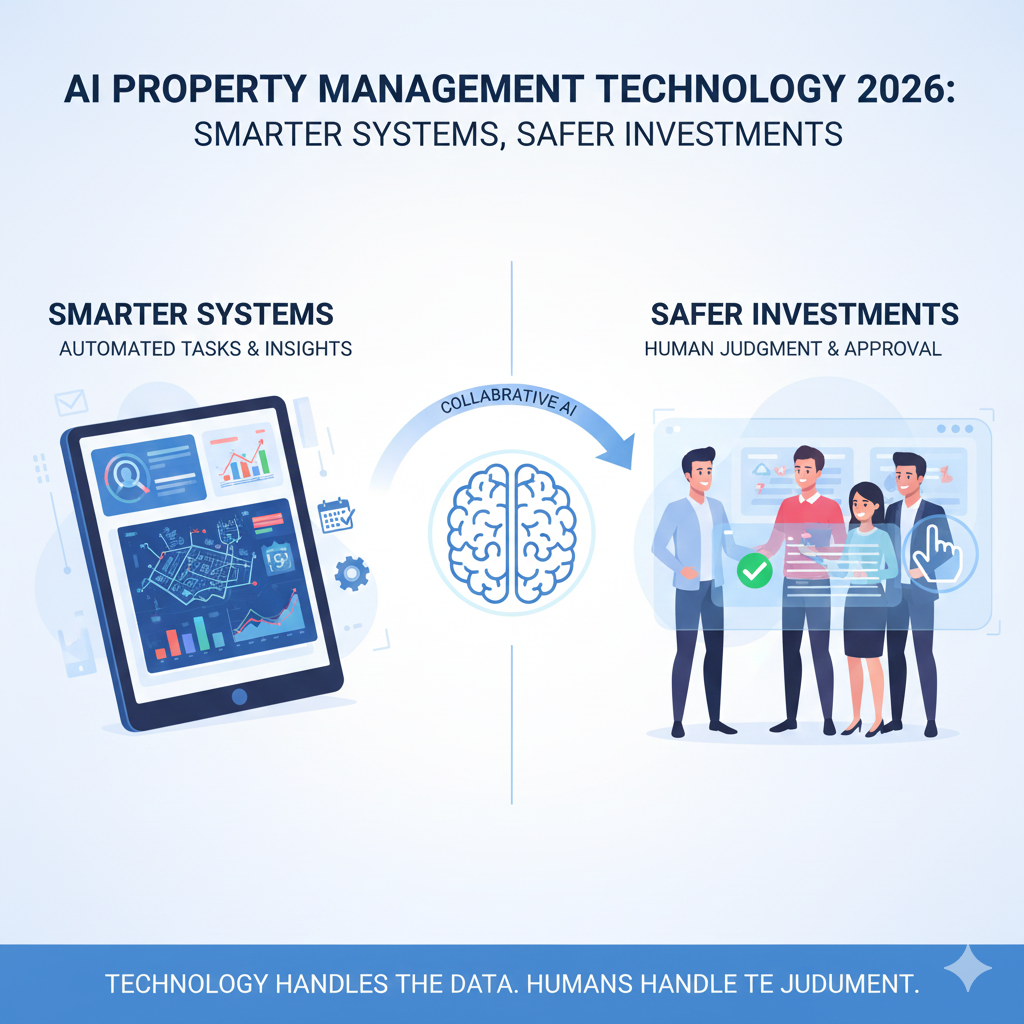
The future of property management is not fully automated—and it shouldn’t be.
Collaborative AI refers to systems that:
- Automate repetitive, high-volume tasks
- Surface insights and risk indicators
- Require human confirmation for high-impact decisions
In other words:
👉 Technology handles the data. Humans handle the judgment.
This “human-in-the-loop” model is especially important when choosing tenants, setting rents, and handling sensitive owner decisions.
How AI Helps Identify Better Tenants (Before Problems Start)
1. Smarter Tenant Screening (Beyond Credit Scores)
Traditional screening relies heavily on:
- Credit score thresholds
- Basic income ratios
- Criminal background checks
AI-driven screening adds deeper context, including:
- Payment pattern analysis across similar renter profiles
- Stability indicators (employment consistency, rental history duration)
- Risk scoring based on thousands of anonymized rental outcomes
This allows property managers to spot red flags earlier and avoid tenants who appear fine on paper—but perform poorly in real life.
2. Pattern Recognition That Humans Can’t Scale
AI excels at recognizing patterns across large data sets, such as:
- Tenants more likely to pay late after month three
- Lease profiles associated with higher maintenance requests
- Behavioral signals that correlate with early move-outs
Instead of reacting to problems, property managers can:
- Adjust approval thresholds
- Require stronger guarantees
- Set expectations upfront with higher-risk profiles
This proactive approach reduces eviction rates and turnover.
Automated Rent Collection Without Losing Control
AI-Powered Rent Tracking
In 2026, AI systems:
- Monitor rent payments in real time
- Flag abnormal delays immediately
- Trigger reminders automatically—before delinquency escalates
This reduces:
- Manual follow-ups
- Awkward tenant conversations
- Owner cash-flow surprises
Human Oversight Still Matters
While reminders are automated, decisions such as:
- Payment plans
- Legal notices
- Escalation timing
are still reviewed and approved by real people who understand the broader context.
That balance protects both landlords and tenants.
Predictive Maintenance: Fixing Problems Before They Get Expensive
One of the biggest cost drains for rental owners is reactive maintenance.
AI-driven predictive maintenance changes that.
How It Works
AI systems analyze:
- Maintenance history
- Property age and component lifespans
- Seasonal usage trends
- Vendor repair data
From this, the system can predict:
- When HVAC systems are likely to fail
- Which plumbing issues tend to repeat
- Which properties require higher preventative attention
Why This Matters for Owners
- Fewer emergency repairs
- Lower long-term capital expenses
- Happier tenants
- Better asset preservation
Again, the key is collaboration: AI flags the issue; humans decide the response.
Why “Human-in-the-Loop” Is Non-Negotiable in Real Estate
Fully automated property management creates risk.
AI cannot:
- Interpret nuance in tenant disputes
- Understand owner-specific priorities
- Apply discretion in legal gray areas
- Balance long-term asset strategy with short-term decisions
In 2026, the most effective property managers use AI as:
- A decision-support system
- A consistency enforcer
- A risk-reduction tool
—not a replacement for experience.
The Owner Benefits of AI Property Management in 2026
When done right, AI property management technology 2026 delivers tangible outcomes:
- Higher-quality tenants
- Lower delinquency rates
- Reduced vacancy
- Predictable cash flow
- Fewer emergency repairs
- Clearer reporting and transparency
For multi-property landlords, these gains compound across the portfolio.
Who Benefits Most from AI-Driven Management?
AI-powered systems deliver the most value to:
- Owners with multiple rental units
- Out-of-state investors
- Time-constrained professionals
- Long-term buy-and-hold investors
- Landlords focused on risk-adjusted returns
In competitive rental markets, operational efficiency becomes a competitive advantage.
Experience Stress-Free 2026 Management with Kanga’s Smart Tech
Technology alone doesn’t manage properties—people do.
What sets modern property management apart in 2026 is the ability to blend advanced systems with disciplined oversight and owner-first thinking.
Kanga Property Management applies collaborative AI tools to tenant screening, rent collection, and maintenance planning—while keeping experienced professionals involved at every critical decision point.
The result is smarter operations, better tenants, and less stress—without sacrificing control or accountability.
For landlords who want the benefits of innovation without the risk of automation gone wrong, AI-driven, human-guided management is the future—and it’s already here.