
Cutting Rental Expenses: 2026 Strategies for Florida Owners
Florida rental owners are entering 2026 facing a very different cost environment than even a few years ago. While rental demand remains strong, expenses are rising faster than rents in many submarkets—especially insurance, HOA fees, and reactive maintenance costs.
The difference between a high-performing rental and a cash-flow drain in 2026 comes down to one thing: operational discipline.
This guide breaks down proven strategies to reduce rental property expenses 2026, with a sharp focus on preventative maintenance subscriptions and navigating the insurance and HOA cost pressures shaping Florida’s investment landscape.
Why Expense Control Matters More Than Rent Growth in 2026
For years, Florida investors benefited from rapid rent appreciation that masked inefficiencies. In 2026, that cushion is gone.
Today’s reality:
- Insurance premiums remain elevated
- HOA fees continue climbing
- Labor and material costs are sticky
- Rent growth has normalized
In this environment, expense optimization—not rent chasing—is what protects ROI.
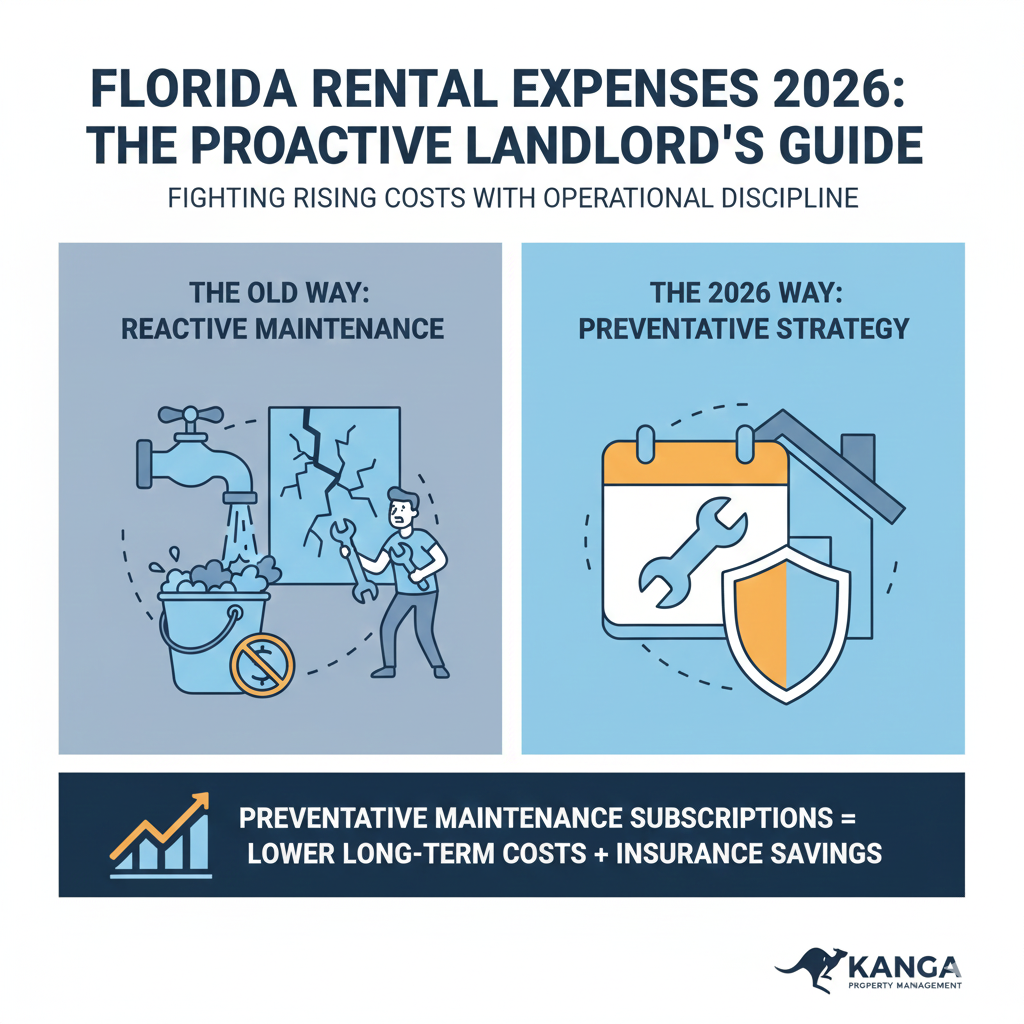
The #1 Cost Mistake Florida Owners Make: Reactive Maintenance
Reactive maintenance is expensive maintenance.
Emergency repairs typically cost:
- 25–40% more than scheduled work
- More in labor premiums
- More in secondary damage
- More in tenant dissatisfaction and turnover
In Florida, where humidity, salt air, storms, and aging infrastructure accelerate wear, waiting for things to break is no longer viable.
Preventative Maintenance Subscriptions: The 2026 Game-Changer
What Is Preventative Maintenance?
Preventative maintenance programs use scheduled inspections and servicing to address small issues before they become large, expensive failures.
Instead of reacting to problems, owners plan for them.
Common Subscription-Based Services
In 2026, high-efficiency portfolios rely on recurring maintenance schedules such as:
- HVAC servicing (2x per year)
- Plumbing inspections
- Electrical safety checks
- Roof and gutter inspections
- Appliance performance reviews
- Pest prevention treatments
These are typically bundled into predictable monthly or quarterly programs.
Why Subscriptions Lower Long-Term Costs
1. Fewer Emergencies
Regular servicing reduces surprise failures—especially HVAC breakdowns, which are among the most expensive rental repairs in Florida.
2. Lower Vendor Pricing
Subscription programs:
- Lock in pricing
- Reduce emergency call-out fees
- Improve vendor availability during peak seasons
3. Longer Equipment Lifespans
Well-maintained systems last years longer, delaying capital expenditures.
4. Happier Tenants
Preventative care leads to:
- Fewer disruptions
- Faster renewals
- Lower turnover costs
Insurance Costs in 2026: The Expense You Can’t Ignore
Insurance remains one of the biggest pressures on Florida rental profitability.
What’s Driving Higher Premiums
- Climate exposure
- Aging building stock
- Claims history
- Deferred maintenance flags
Insurers are increasingly scrutinizing property condition—not just location.
How Maintenance Directly Impacts Insurance Costs
Preventative maintenance can:
- Reduce claims
- Improve inspection outcomes
- Strengthen underwriting profiles
- Support premium negotiations at renewal
Insurers are far more receptive to properties with documented maintenance histories.
In 2026, maintenance is no longer just an operating expense—it’s an insurance risk management tool.
HOA Fees: Managing the Cost You Don’t Control
HOA costs are rising across Florida due to:
- Reserve funding requirements
- Deferred infrastructure repairs
- Insurance pass-throughs
- Compliance mandates
While owners can’t control HOA budgets, they can control how HOA rules impact their operating costs.
Strategies to Offset Rising HOA Expenses
1. Proactive Rule Compliance
Violations result in fines, special assessments, and administrative fees.
Routine inspections help catch:
- Exterior issues
- Balcony or patio violations
- HVAC and window compliance problems
2. Preventative Repairs That Avoid HOA Citations
Small fixes prevent:
- Board enforcement actions
- Escalated penalties
- Forced vendor usage at higher rates
3. Lease Enforcement
Tenants who violate HOA rules cost owners money. Strong enforcement and education reduce repeat issues.
Expense Visibility: The Hidden Advantage of Professional Maintenance Systems
Many landlords underestimate costs because they lack visibility.
High-efficiency operations in 2026 rely on:
- Itemized maintenance tracking
- Property-level cost benchmarking
- Vendor performance analysis
- Repair vs. replace forecasting
This allows owners to identify:
- Properties over-consuming maintenance
- Equipment nearing end-of-life
- Cost-saving opportunities across portfolios
Small Properties vs. Multi-Unit Portfolios: Why Scale Matters
Preventative maintenance benefits scale exponentially.
Single-Property Owners
- Benefit from predictability
- Reduce emergency disruption
- Improve long-term asset value
Multi-Property Owners
- Achieve vendor pricing leverage
- Standardize systems and schedules
- Reduce administrative overhead
- Make data-driven capital decisions
In 2026, systems beat shortcuts.
How Maintenance Strategy Protects Asset Value
Deferred maintenance doesn’t just increase expenses—it erodes value.
Properties with:
- Poor maintenance records
- Aging systems
- Frequent emergency repairs
often sell at a discount or fail inspections during refinancing.
Preventative maintenance protects:
- Appraisal outcomes
- Exit flexibility
- Long-term equity growth
The True Cost of “Saving” on Maintenance
Cutting maintenance budgets often leads to:
- Higher insurance deductibles
- Larger capital replacements
- Increased vacancy
- Legal exposure from habitability issues
The goal in 2026 is not to spend less—it’s to spend smarter.
Putting It All Together: A High-Efficiency 2026 Maintenance Model
Successful Florida landlords in 2026:
- Budget for preventative maintenance subscriptions
- Track expenses by property and system
- Use maintenance to manage insurance risk
- Minimize HOA penalties through compliance
- Replace reaction with planning
This approach transforms maintenance from a cost center into a profit-protection strategy.
Lower Your Overheads with Kanga’s 2026 Maintenance Protocols
Reducing expenses in 2026 requires more than cutting corners—it requires structure, foresight, and execution.
Kanga Property Management applies preventative maintenance protocols designed specifically for Florida’s climate, insurance realities, and HOA environments. Through subscription-based servicing, disciplined inspections, and data-driven vendor management, Kanga helps owners control costs before they spiral.
For landlords focused on protecting cash flow, reducing risk, and maximizing long-term returns, high-efficiency maintenance isn’t optional—it’s essential.
In 2026, the smartest savings come from systems that work before problems start.