
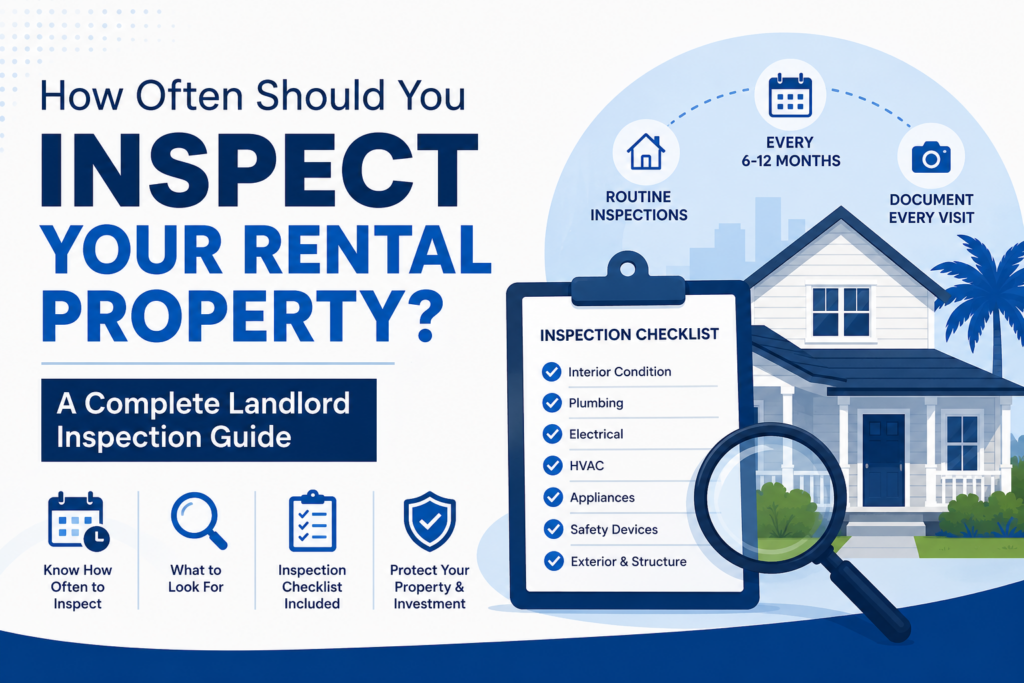
How Often Should You Inspect Your Rental Property? A Complete Landlord Inspection Guide
One of the biggest mistakes landlords make isn’t choosing the wrong tenant or setting the wrong rent—it’s waiting too long to inspect their rental property.
Many property owners hand over the keys, collect rent every month, and don’t step inside the home again until the tenant moves out.
By then, what could have been a simple repair may have become thousands of dollars in damage.
Routine rental property inspections are one of the most effective ways to protect your investment, extend the life of your property, reduce maintenance costs, and build better relationships with tenants.
However, inspections need to be done properly.
Inspect too often, and tenants may feel like their privacy is being invaded. Wait too long, and small problems can quickly turn into major repairs.
So, how often should you inspect a rental property?
The answer depends on several factors, including the property’s age, the lease terms, the tenant’s history, and the type of inspection being performed.
This guide covers everything landlords need to know about rental property inspections, including the different types of inspections, what to look for, common mistakes to avoid, and how regular inspections can save thousands of dollars over the life of your investment.
Why Rental Property Inspections Matter
A rental property is one of the largest financial investments most landlords will ever make.
Protecting that investment requires more than collecting rent.
Routine inspections help landlords:
- Identify maintenance issues early
- Prevent expensive repairs
- Ensure lease compliance
- Verify tenant safety
- Protect property value
- Improve long-term rental income
- Reduce vacancy costs
Many costly repairs begin as small issues that could have been resolved quickly if discovered sooner.
For example:
- A small plumbing leak can become major water damage.
- A loose roof shingle can become a roof replacement.
- A tiny HVAC issue can turn into a complete system failure.
Routine inspections allow landlords to catch these problems before they become emergencies.
How Often Should a Rental Property Be Inspected?
There is no one-size-fits-all answer.
However, most professional property managers recommend a structured inspection schedule throughout the year.
A common schedule includes:
| Inspection Type | Recommended Timing |
| Move-In Inspection | Before tenant occupies property |
| Routine Inspection | Every 6–12 months |
| Seasonal Inspection | As needed |
| Drive-By Exterior Inspection | Every few months |
| Move-Out Inspection | Immediately after tenant vacates |
This schedule helps maintain the property while respecting tenant privacy.
The Different Types of Rental Property Inspections
Not every inspection serves the same purpose.
Understanding the different inspection types helps landlords stay organized.
Move-In Inspection
This inspection creates a record of the property’s condition before the tenant moves in.
Document:
- Walls
- Floors
- Appliances
- Windows
- Doors
- Plumbing fixtures
- Cabinets
- Exterior condition
Photos and written notes are essential.
This documentation becomes the baseline for comparing the property’s condition at move-out.
Routine Inspections
Routine inspections are performed while the tenant is living in the property.
Their purpose is to identify:
- Maintenance concerns
- Safety hazards
- Lease violations
- Plumbing leaks
- HVAC issues
- Appliance problems
Routine inspections should be professional, respectful, and focused on property condition rather than personal belongings.
Seasonal Inspections
Certain times of year are ideal for preventative maintenance.
Seasonal inspections may include:
Spring
- Roof inspection
- Landscaping review
- Exterior drainage
- Irrigation systems
Summer
- Air conditioning performance
- Exterior paint
- Windows
- Pest activity
Fall
- Gutters
- Tree trimming
- Weather sealing
- Exterior lighting
Winter
- Water heater
- Smoke detectors
- Plumbing
- Safety equipment
Seasonal inspections help reduce emergency repairs.
Exterior Drive-By Inspections
Sometimes landlords only need to inspect the exterior.
These inspections can identify:
- Lawn maintenance issues
- Roof damage
- Exterior paint deterioration
- Broken fencing
- Drainage problems
Exterior inspections are quick but extremely valuable.
Move-Out Inspection
This inspection determines the property’s condition after the tenant leaves.
It helps identify:
- Damage
- Cleaning requirements
- Missing items
- Lease violations
Comparing move-in and move-out documentation makes security deposit decisions much easier.
What Should Landlords Look For?
A systematic approach produces the best results.
Plumbing
Check for:
- Leaks
- Water stains
- Slow drains
- Running toilets
- Water pressure
Even small plumbing issues can become expensive if ignored.
HVAC System
Inspect:
- Air filters
- Thermostat operation
- Airflow
- Unusual noises
- Drain lines
Preventative maintenance extends equipment life.
Walls and Ceilings
Look for:
- Cracks
- Water damage
- Mold
- Holes
- Excessive wear
Early detection prevents structural repairs later.
Flooring
Inspect for:
- Scratches
- Water damage
- Broken tiles
- Loose flooring
- Carpet condition
Flooring is one of the most expensive replacement items in rental properties.
Kitchen
Review:
- Appliances
- Cabinets
- Countertops
- Sink plumbing
- Garbage disposal
Kitchens experience heavy daily use.
Bathrooms
Inspect:
- Toilets
- Showers
- Caulking
- Ventilation
- Water damage
Bathrooms are common sources of hidden moisture issues.
Doors and Windows
Check:
- Locks
- Screens
- Weather stripping
- Window operation
- Door alignment
Properly functioning doors and windows improve both security and energy efficiency.
Smoke Detectors
Test every detector.
Replace batteries if needed.
Safety devices should always be operational.
Signs That Require Immediate Attention
Some inspection findings should never wait.
Examples include:
- Water leaks
- Mold growth
- Electrical hazards
- Roof leaks
- Pest infestations
- Broken handrails
- Structural damage
Prompt repairs reduce liability and protect the property’s value.
Common Lease Violations Inspections Can Reveal
Routine inspections sometimes uncover lease violations.
Examples include:
- Unauthorized occupants
- Unauthorized pets
- Smoking inside the property
- Property alterations
- Illegal activities
- Excessive clutter creating safety hazards
Addressing these issues early often prevents larger problems later.
Should Tenants Be Present During Inspections?
Many landlords wonder whether tenants should attend inspections.
While practices vary, having the tenant present can provide opportunities to:
- Discuss maintenance concerns
- Answer questions
- Explain upcoming repairs
- Build positive communication
Professional, respectful inspections often strengthen landlord-tenant relationships.
Inspection Documentation
Documentation is one of the most valuable parts of the inspection process.
Every inspection should include:
Written Notes
Document observations for each room.
Photos
Photograph:
- Damage
- Repairs
- Appliances
- Fixtures
- Exterior areas
Time-stamped images provide valuable records.
Repair Recommendations
Identify:
- Immediate repairs
- Preventative maintenance
- Future replacement planning
Good documentation protects both landlords and tenants.
Common Inspection Mistakes
Many landlords unintentionally reduce the effectiveness of inspections.
Avoid these mistakes:
Waiting Too Long
The longer inspections are delayed, the greater the chance small issues become major repairs.
Inconsistent Inspection Schedules
Random inspections often lead to inconsistent property management.
Create a schedule and follow it.
Poor Documentation
Without photos and written records, proving damage later becomes much more difficult.
Ignoring Minor Problems
Small repairs are almost always less expensive than major repairs.
Address issues early.
Annual Rental Property Inspection Checklist
A complete inspection should review:
✓ Plumbing fixtures
✓ HVAC system
✓ Appliances
✓ Smoke detectors
✓ Carbon monoxide detectors (where applicable)
✓ Doors and locks
✓ Windows and screens
✓ Flooring
✓ Walls and ceilings
✓ Cabinets
✓ Countertops
✓ Bathrooms
✓ Electrical outlets
✓ Exterior condition
✓ Roof (if visible)
✓ Landscaping
✓ Fence and gates
✓ Water heater
✓ Garage (if applicable)
Using a checklist ensures nothing gets overlooked.
How Professional Property Management Simplifies Inspections
Managing inspections across multiple properties can quickly become overwhelming.
Professional property management companies typically provide:
| Service | Benefit |
| Scheduled inspections | Consistent property oversight |
| Detailed reports | Organized documentation |
| Professional photography | Accurate condition records |
| Maintenance coordination | Faster repairs |
| Vendor scheduling | Efficient service |
| Compliance tracking | Better record keeping |
Structured inspection programs help landlords identify problems early while preserving long-term property value.
Frequently Asked Questions
How often should landlords inspect rental properties?
Many landlords perform routine inspections every six to twelve months, along with move-in and move-out inspections.
Can inspections help reduce maintenance costs?
Yes. Early detection of small issues often prevents expensive repairs later.
Should inspections include photographs?
Absolutely. Photos provide objective documentation of the property’s condition.
What is the biggest benefit of routine inspections?
Preventing small problems from becoming costly repairs while protecting the property’s long-term value.
Are inspections only about finding damage?
No. Inspections also identify preventative maintenance opportunities, safety concerns, and potential lease violations.
Final Thoughts
Rental property inspections are one of the simplest and most effective ways to protect your investment.
They help landlords:
- Reduce repair costs
- Improve tenant communication
- Protect property value
- Prevent emergency maintenance
- Extend the life of major building systems
- Maintain higher-quality rental housing
The best landlords don’t wait for something to break before paying attention to their property.
Instead, they follow a consistent inspection schedule, document everything carefully, and address issues while they’re still small.
Whether you own one rental property or an expanding investment portfolio, routine inspections should be a key part of your long-term property management strategy.
A proactive inspection today can prevent a costly repair tomorrow and that’s one of the smartest investments any landlord can make.