
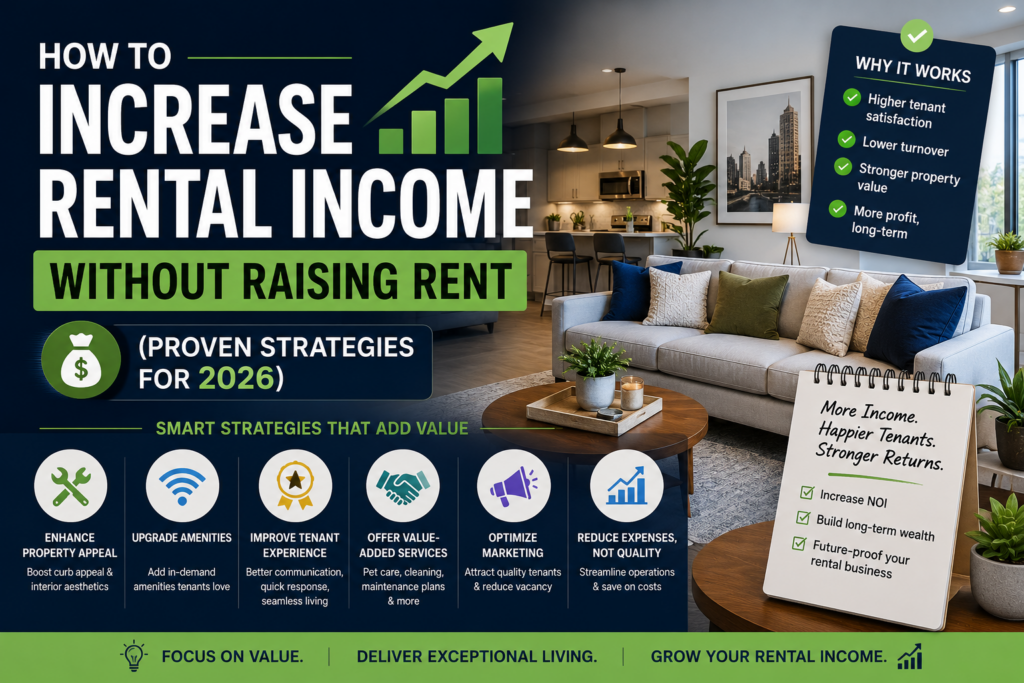
How to Increase Rental Income Without Raising Rent (Proven Strategies for 2026)
You Don’t Need to Raise Rent to Make More Money
Most landlords default to one strategy:
Raise the rent.
But in 2026, that approach is riskier than ever.
Higher rents can lead to:
- Longer vacancies
- Higher tenant turnover
- Increased marketing and repair costs
The smarter move?
Increase income without touching base rent.
This guide breaks down exactly how top-performing landlords are doing it.
Why Raising Rent Is No Longer the Best First Move
Vacancy Costs More Than You Think
Even a short vacancy can wipe out months of incremental rent increases.
Example:
- $200 rent increase = $2,400/year
- 1 month vacancy = potentially $2,000–$4,000 lost
The math doesn’t always work in your favor.
Tenant Retention Is More Valuable Than Ever
Long-term tenants:
- Reduce turnover costs
- Require less marketing
- Typically cause fewer issues
Keeping a good tenant is often more profitable than replacing them at a higher rent.
Market Sensitivity Has Increased
With affordability pressure rising, tenants are:
- Comparing more options
- Negotiating harder
- Moving faster when priced out
Pushing rent too aggressively can backfire.
Strategy #1 — Add Revenue Through Amenities
Paid Add-Ons Tenants Actually Want
Instead of increasing rent, offer optional upgrades:
Examples:
- Reserved parking
- Storage units
- Pet rent or pet amenities
- In-unit laundry upgrades
These create additional revenue streams without pricing out your base tenant.
Bundle Services for Higher Perceived Value
Simple bundles can increase revenue while improving satisfaction:
- “Convenience Package” (parking + storage)
- “Pet Package” (pet fee + cleaning support)
Tenants are more likely to pay for value than accept higher rent.
Strategy #2 — Optimize Lease Terms
Charge Premiums for Shorter Leases
Not every tenant wants a 12-month lease.
Offering:
- 6-month leases
- Month-to-month options
Allows you to charge a premium for flexibility.
Align Lease Timing With Peak Demand
Leases ending in peak rental seasons (spring/summer) allow for:
- Faster leasing
- Better pricing power
Smart lease structuring increases long-term income potential.
Strategy #3 — Reduce Vacancy (The Hidden Income Lever)
Faster Turnover = More Annual Income
Every day a unit sits empty is lost revenue.
Improving:
- Listing quality
- Response time
- Showing availability
Can significantly reduce downtime between tenants.
Pre-Leasing Before Move-Out
Top landlords start marketing before the current tenant leaves.
This can:
- Eliminate vacancy gaps
- Maintain consistent cash flow
Professional Marketing Matters
High-quality:
- Photos
- Descriptions
- Listings
Attract better tenants faster.
This directly impacts income.
Strategy #4 — Implement Smart Fee Structures
Common Fees That Add Revenue**
Done correctly, these don’t hurt retention:
- Late payment fees
- Lease renewal fees
- Cleaning fees
- Maintenance service fees (for non-standard requests)
These should be:
- Transparent
- Reasonable
- Clearly communicated
Avoid Overdoing It
Too many fees can:
- Damage trust
- Increase tenant churn
Balance is key.
Strategy #5 — Upgrade Strategically (Not Expensively)
Focus on High-ROI Improvements
Not all upgrades are worth it.
Best ROI upgrades:
- Fresh paint
- Updated lighting
- Modern fixtures
- Smart home features
These improve perceived value without major cost.
Smart Tech = Higher Value Perception
Adding:
- Smart locks
- Thermostats
- Security features
Can justify higher overall income (via rent or add-ons).
Strategy #6 — Reduce Operating Costs
Increasing income isn’t just about earning more — it’s about keeping more.
Maintenance Efficiency
Reactive maintenance is expensive.
Proactive maintenance:
- Reduces emergency repairs
- Extends asset life
- Lowers long-term costs
Vendor Optimization
Many landlords overpay for:
- Repairs
- Landscaping
- Cleaning
Reviewing vendors can significantly improve margins.
Strategy #7 — Improve Tenant Experience (Retention = Profit)
Happy Tenants Stay Longer
Retention reduces:
- Vacancy
- Turnover costs
- Marketing expenses
Simple improvements:
- Faster maintenance response
- Clear communication
- Easy payment systems
Small Improvements, Big Impact
Examples:
- Online portals
- Automated reminders
- Better onboarding
These create a smoother experience — and longer tenancies.
Strategy #8 — Dynamic Pricing (Advanced Strategy)
Adjust Rent Based on Real-Time Demand
Instead of fixed pricing:
- Adjust based on seasonality
- Monitor local demand trends
This allows for optimized income over time.
Use Data, Not Guesswork
Tracking:
- Local listings
- Vacancy rates
- Time on market
Gives a competitive edge.
Where Most Landlords Leave Money on the Table
Common mistakes:
- Focusing only on rent increases
- Ignoring vacancy costs
- Underutilizing add-on revenue
- Poor lease structuring
- Weak tenant experience
Fixing these often leads to higher income without higher rent.
The Role of Property Management in Increasing Income
This is where execution becomes everything.
A strong property management system can:
- Reduce vacancy time
- Optimize pricing
- Improve tenant retention
- Streamline operations
Most income gains come from better management, not higher rent.
Key Takeaways
- Raising rent isn’t the only (or best) way to increase income
- Vacancy reduction is one of the biggest profit drivers
- Small add-ons create scalable revenue
- Tenant retention directly impacts ROI
- Operational efficiency = higher margins
Conclusion: More Income Comes From Smarter Strategy — Not Higher Prices
The landlords seeing the highest returns in 2026 aren’t charging the most.
They’re:
- Operating smarter
- Retaining better tenants
- Maximizing every part of the rental lifecycle
That’s where real growth happens.