
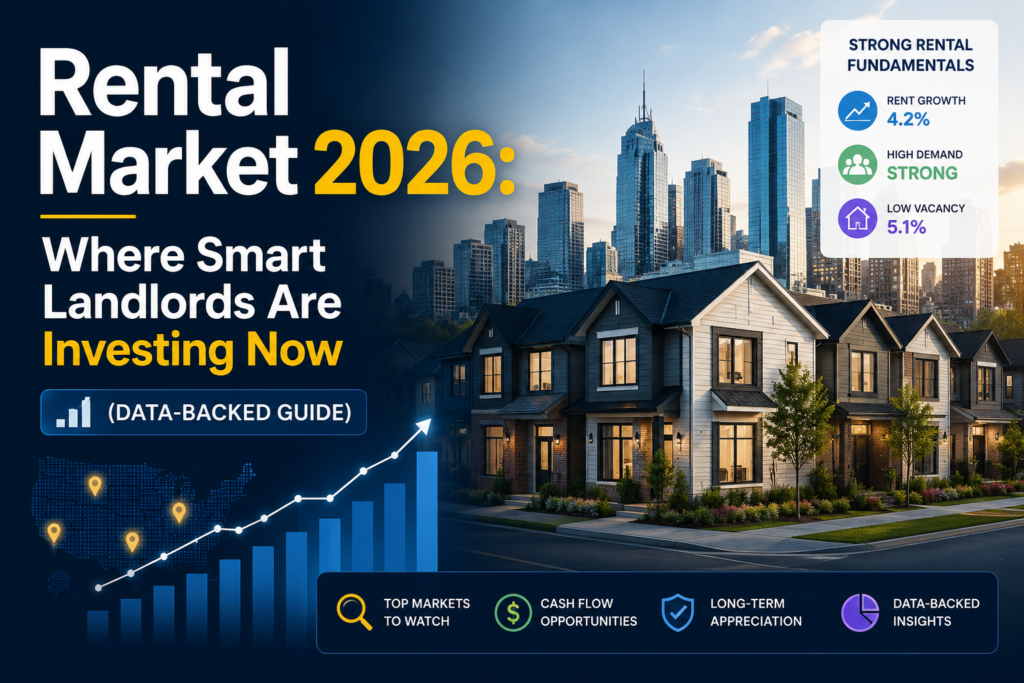
Rental Market 2026: Where Smart Landlords Are Investing Now (Data-Backed Guide)
The Rental Market Is Changing — Fast
The rental market heading into 2026 isn’t just shifting — it’s restructuring.
Interest rates, migration patterns, remote work, and affordability pressures have all reshaped where demand is growing and where it’s fading. What worked even two years ago is no longer a guaranteed win.
For landlords, this creates a clear divide:
- Those reacting to the market
- Those positioning ahead of it
This guide breaks down exactly where smart landlords are investing now, and more importantly, why — using real market behavior, not assumptions.
The Big Shift: What’s Driving the 2026 Rental Market
Migration Is Still the #1 Force
Population movement continues to reshape rental demand more than any other factor.
Key trends:
- Movement from high-cost urban cores → secondary cities
- Continued growth in Sunbelt regions
- Suburban demand remains strong due to hybrid work
Landlords following migration patterns — not just price trends — are outperforming.
Affordability Is Reshaping Demand
Rising home prices and mortgage rates have pushed more people into renting longer.
Result:
- Higher long-term renter pool
- Increased demand for mid-tier housing
- Stronger occupancy rates in affordable segments
This is not temporary — it’s structural.
Remote Work Has Redefined “Location Value”
Tenants are no longer prioritizing proximity to offices the same way.
Instead, they prioritize:
- Space
- Lifestyle
- Cost efficiency
That shift has unlocked entirely new rental markets.
Top Investment Markets for Landlords in 2026
Secondary Cities Are Outperforming Major Metros
Cities that used to be “secondary” are now primary targets.
Examples include:
- Tampa, FL
- Raleigh, NC
- Austin suburbs
- Phoenix outskirts
Why they work:
- Lower entry cost
- Strong population growth
- High rental demand
These markets balance affordability + growth, which is where ROI lives.
Suburban Markets Are No Longer “Safe Plays” — They’re Strategic Plays
Suburbs used to be predictable. Now they’re high-performing.
What’s changed:
- Hybrid work allows renters to move further out
- Families are renting longer instead of buying
- Demand for space has increased
Smart landlords are targeting:
- Good school districts
- Lifestyle-driven suburbs
- Areas within 30–60 minutes of major cities
Workforce Housing Is the Most Underrated Opportunity
Luxury gets attention. Workforce housing gets returns.
This segment includes:
- Middle-income renters
- Essential workers
- Long-term tenants
Benefits:
- Lower vacancy rates
- More stable tenants
- Less volatility
In 2026, this is one of the highest-performing asset classes.
Property Types That Are Winning Right Now
Single-Family Rentals (SFRs)
Still one of the strongest plays.
Why:
- High demand from families
- Lower turnover
- Premium rental pricing
SFR portfolios continue to expand — especially in suburban markets.
Small Multifamily (2–10 Units)
The “sweet spot” for many landlords.
Advantages:
- Scalable
- Easier to manage than large complexes
- Strong cash flow potential
This category is attracting both new and experienced investors.
Build-to-Rent Communities
A fast-growing trend.
Developers are now building homes specifically for renters.
Why it works:
- Designed for long-term tenants
- Consistent quality
- Higher retention rates
This model is gaining serious traction in 2026.
What Smart Landlords Are Doing Differently
They’re Buying Based on Data — Not Gut
Top-performing landlords are using:
- Rental demand analytics
- Occupancy trends
- Migration data
They’re not guessing — they’re modeling.
They’re Optimizing for Cash Flow, Not Appreciation
The 2020–2022 appreciation boom changed expectations.
In 2026, smart investors focus on:
- Monthly income
- Expense control
- Long-term stability
Cash flow is back to being king.
They’re Thinking Like Operators — Not Just Owners
Owning property is no longer enough.
Winning landlords:
- Optimize tenant experience
- Reduce vacancy time
- Streamline operations
The difference between average and top-tier returns often comes down to execution.
Risks to Watch in 2026
Overpaying in “Hot” Markets
Not all growth markets are good investments.
Some are:
- Overpriced
- Oversaturated
- Slowing down
Smart landlords avoid hype-driven decisions.
Rising Operating Costs
Expenses are increasing across the board:
- Maintenance
- Insurance
- Property taxes
Margins can shrink quickly without proper management.
Poor Tenant Retention
Vacancy is one of the biggest hidden costs.
Turnover leads to:
- Lost income
- Repair costs
- Leasing expenses
Retention is now a primary profit driver.
How Property Management Impacts Investment Success
This is where many landlords underestimate the difference.
A strong property management strategy can:
- Reduce vacancy rates
- Improve tenant retention
- Optimize rental pricing
- Handle maintenance efficiently
Without it, even strong investments can underperform.
Key Takeaways for Landlords in 2026
- Follow migration, not headlines
- Prioritize affordability-driven markets
- Focus on cash flow over speculation
- Invest in tenant experience
- Treat property management as a growth tool
Conclusion: The Gap Between Average and Top Landlords Is Growing
The rental market in 2026 is not harder — it’s just more selective.
The opportunities are there, but they’re no longer obvious.
The landlords who win are the ones who:
- Adapt early
- Invest strategically
- Operate efficiently
Everyone else is playing catch-up.
If you’re looking to optimize your portfolio — whether that’s improving performance, reducing vacancies, or scaling into better markets — having the right management strategy makes the difference.