
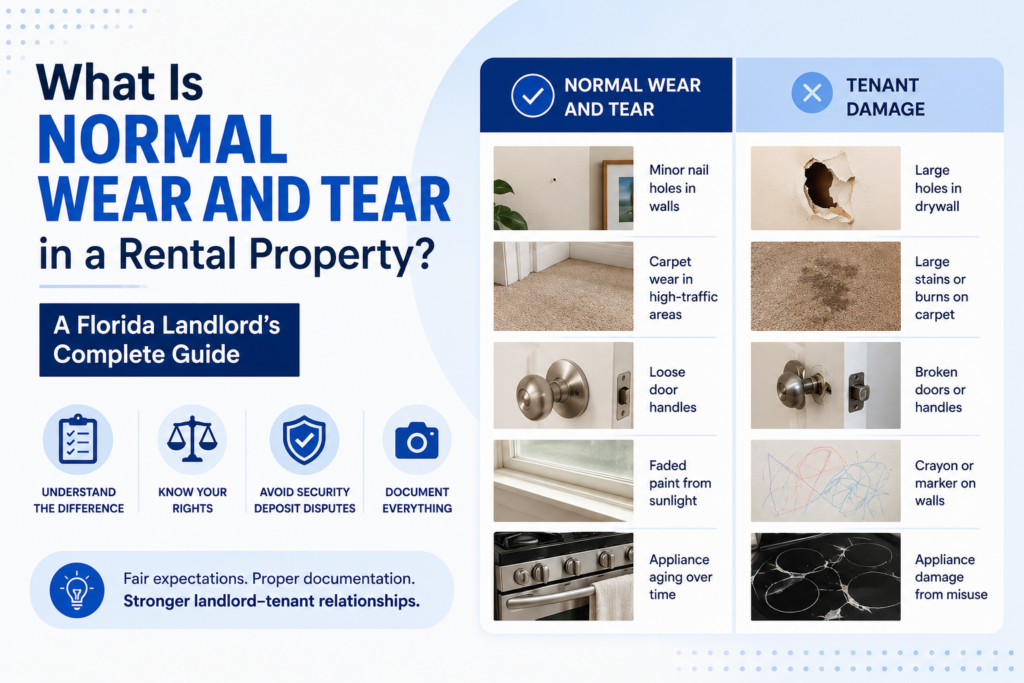
What Is Normal Wear and Tear in a Rental Property? A Florida Landlord’s Complete Guide
One of the most common disputes between landlords and tenants happens after a tenant moves out.
The tenant expects their full security deposit back.
The landlord believes the property has been damaged and wants to deduct repair costs.
So, who’s right?
The answer usually comes down to one important question:
Is it normal wear and tear, or is it tenant damage?
For landlords, understanding this difference is critical. Charging a tenant for normal aging of a property can lead to unnecessary disputes, while failing to charge for actual damage can cost thousands of dollars over time.
Whether you own one rental property or manage an entire portfolio, knowing what qualifies as normal wear and tear will help you make fair decisions, protect your investment, and build better relationships with tenants.
This guide explains everything Florida landlords need to know about normal wear and tear, what damage can legally be charged to tenants, and the best practices for documenting property condition before and after every lease.
What Is Normal Wear and Tear?
Normal wear and tear refers to the gradual deterioration of a rental property that occurs through ordinary, everyday use.
No matter how responsible a tenant is, every home experiences some level of aging over time.
Paint fades.
Carpet naturally wears down.
Door handles loosen.
Appliances age.
These are all expected parts of owning rental property.
Landlords should plan and budget for these routine maintenance costs as part of operating a rental business.
What Is Considered Tenant Damage?
Tenant damage occurs when the property’s condition goes beyond what would normally happen through everyday living.
Damage is generally caused by negligence, misuse, accidents, or intentional actions.
Examples include:
- Large holes in drywall
- Broken windows
- Missing fixtures
- Burned countertops
- Broken doors
- Torn flooring
- Significant pet damage
- Unauthorized painting
- Broken appliances caused by misuse
Unlike normal wear and tear, these repairs may justify deductions from a tenant’s security deposit if properly documented.
Why Understanding the Difference Matters
Misunderstanding what qualifies as normal wear and tear is one of the leading causes of security deposit disputes.
For landlords, correctly identifying damage helps:
- Protect rental income
- Preserve property value
- Reduce legal disputes
- Improve tenant relationships
- Create consistent move-out procedures
Making fair decisions also helps establish trust and professionalism.
Common Examples of Normal Wear and Tear
Below are conditions that generally occur naturally over time.
Paint
Normal wear includes:
- Minor scuff marks
- Fading from sunlight
- Small nail holes from picture frames
- Minor touch-up needs
These conditions are expected after several years of occupancy.
Carpet
Carpet naturally experiences wear through everyday use.
Examples include:
- Flattened fibers
- Minor traffic patterns
- General aging
- Slight fading
Replacing carpet due to age is generally considered part of normal property maintenance.
Flooring
Hardwood and tile flooring may develop:
- Minor scratches
- Light surface wear
- Normal fading
- Slight dullness
These conditions occur even when tenants take good care of the property.
Appliances
Appliances have limited life spans.
Examples of normal aging include:
- Reduced efficiency
- Cosmetic wear
- Minor discoloration
- Age-related replacement
Normal equipment failure is generally a landlord responsibility.
Doors and Cabinets
Over time, landlords may notice:
- Loose hinges
- Minor alignment changes
- Worn handles
- Light scratches
These are expected as properties age.
Examples of Tenant Damage
Damage usually results from improper use rather than ordinary living.
Wall Damage
Tenant damage may include:
- Large holes
- Broken drywall
- Graffiti
- Extensive unauthorized painting
These conditions often require repair beyond normal maintenance.
Flooring Damage
Examples include:
- Large stains
- Burn marks
- Deep gouges
- Broken tiles
- Water damage caused by neglect
These repairs often exceed ordinary wear.
Appliance Damage
Examples include:
- Broken refrigerator shelves
- Damaged oven doors
- Missing appliance parts
- Physical damage from misuse
Intentional or negligent damage may be the tenant’s responsibility.
Plumbing Damage
Examples include:
- Toilets clogged due to improper use
- Broken fixtures
- Damage caused by flushing prohibited items
Prompt reporting can often prevent larger problems.
Pet Damage
Pets can sometimes cause significant property damage, including:
- Torn screens
- Scratched doors
- Chewed trim
- Strong odors
- Damaged flooring
- Stained carpet
Many landlords address these risks through pet deposits or pet fees outlined in the lease agreement.
Normal Wear and Tear vs. Tenant Damage
| Normal Wear and Tear | Tenant Damage |
| Faded paint | Large holes in walls |
| Small nail holes | Broken drywall |
| Worn carpet | Large carpet stains |
| Loose cabinet hinges | Broken cabinets |
| Minor scratches on flooring | Cracked or gouged flooring |
| Appliance aging | Appliance damage from misuse |
| Faded blinds | Broken blinds |
| Worn weather stripping | Missing doors or fixtures |
This comparison provides a helpful starting point, but every situation should be evaluated individually.
The Importance of Move-In Inspections
One of the best ways to avoid disagreements is by thoroughly documenting the property’s condition before a tenant moves in.
A complete move-in inspection should include:
- Every room
- Flooring
- Walls
- Appliances
- Windows
- Bathrooms
- Kitchens
- Exterior areas
The more detailed your records, the easier it becomes to compare conditions at move-out.
Why Photos Are Essential
Photographs provide objective evidence.
Every landlord should photograph:
- Walls
- Floors
- Ceilings
- Appliances
- Cabinets
- Fixtures
- Exterior areas
Time-stamped photos create valuable documentation if questions arise later.
Conducting a Move-Out Inspection
Move-out inspections should occur as soon as practical after the tenant vacates the property.
During the inspection:
- Compare the property to move-in photos.
- Document any damage.
- Photograph repair needs.
- Prepare repair estimates.
- Organize receipts and invoices.
Consistency is key.
Every property should follow the same inspection process.
Common Mistakes Landlords Make
Many landlords unintentionally create disputes by making avoidable mistakes.
Charging for Normal Aging
Properties naturally deteriorate over time.
Replacing worn carpet after years of use is often a cost of doing business.
Failing to Document Damage
Without photographs or inspection reports, proving damage becomes much more difficult.
Delaying Inspections
Waiting too long after move-out can create uncertainty about when damage occurred.
Prompt inspections produce better documentation.
Making Inconsistent Decisions
Applying different standards to different tenants can create unnecessary conflicts.
A standardized inspection process helps ensure fairness.
How to Reduce Property Damage
The best way to reduce repair costs is through prevention.
Successful landlords often:
- Perform regular inspections.
- Respond quickly to maintenance requests.
- Screen tenants carefully.
- Use detailed lease agreements.
- Educate tenants about property care.
- Address small issues before they become major repairs.
Preventative management benefits everyone involved.
How Property Management Helps
Professional property management companies typically follow standardized procedures that help reduce disputes.
Services often include:
| Service | Benefit |
| Move-in inspections | Accurate property records |
| Move-out inspections | Consistent evaluations |
| Photo documentation | Objective evidence |
| Repair coordination | Faster property turnover |
| Security deposit documentation | Reduced disputes |
Having organized systems helps landlords protect both their investment and their tenant relationships.
Frequently Asked Questions
Can landlords charge tenants for repainting?
It depends on the condition of the walls and whether the repainting is required because of damage or simply normal aging.
Is worn carpet considered damage?
Normal wear from everyday use generally differs from excessive staining, burns, or significant damage.
Can landlords charge for small nail holes?
Small nail holes used for hanging pictures are often considered ordinary wear, while excessive wall damage may not be.
How important are inspection photos?
Photographs are one of the most valuable pieces of evidence available when evaluating property condition.
What is the best way to avoid disputes?
Detailed inspections, consistent documentation, and clear communication throughout the tenancy.
Rental Property Move-Out Checklist
Before returning a security deposit, review:
✓ Walls
✓ Flooring
✓ Carpet
✓ Appliances
✓ Windows
✓ Doors
✓ Cabinets
✓ Plumbing fixtures
✓ Bathrooms
✓ Kitchen
✓ Smoke detectors
✓ Exterior condition
✓ Landscaping (if applicable)
✓ Garage (if applicable)
Using a standardized checklist helps ensure every tenant is treated fairly and consistently.
Final Thoughts
Every rental property experiences wear over time.
Understanding the difference between normal wear and tear and actual tenant damage is one of the most valuable skills a landlord can develop.
When landlords document property condition thoroughly, conduct consistent inspections, and communicate clearly with tenants, security deposit disputes become far less common.
Rather than viewing move-out inspections as an opportunity to recover every maintenance expense, successful landlords focus on fairness, consistency, and protecting the long-term value of their investment.
By following a structured inspection process and maintaining accurate records throughout every lease, you’ll make better decisions, reduce conflict, and create a more professional rental experience for both you and your tenants.